The limitations of imported scientific models, and a re-emphasis of the case for making our own contributions to the understanding of life.

Demilade Fate
Demilade Fate
Imagine a doctor tells you there is a genetic test that can estimate your risk of developing a particular disease. He then tells you that this test has been developed using thousands, even millions, of people. Thanks to this, its developers have identified genetic variations associated with said disease, and they have also calculated the effects of those variations and combined them into a score that can help predict your susceptibility. You would be a bit excited, wouldn’t you?
But then, there is a little problem (how little exactly, we’re about to find out). It is brought to your attention that most of the people whose genetic information was used to develop this test may have been European. You, however, are Nigerian.
How much confidence then would you place in the result?
If you think this is a hypothetical problem, then you’re wrong. It is one of the most important questions confronting modern genomic medicine, and it shows an often-overlooked flaw in the way scientific knowledge is sometimes produced and exported. What this tells us is that a method being sophisticated, statistically rigorous and having been published in a prestigious journal does not stop it from having understated yet significant pockets of weakness or performing poorly when applied to populations whose biology was inadequately represented in the research that produced it.
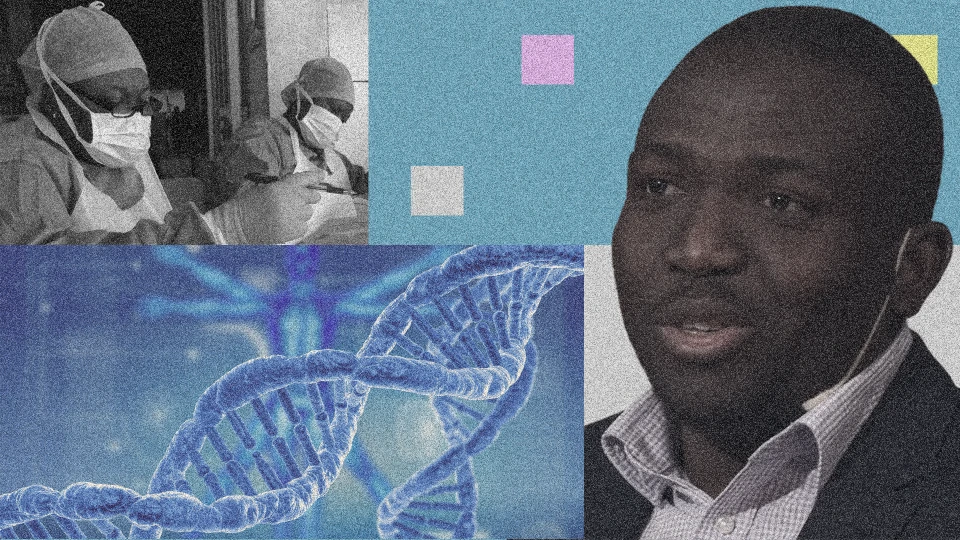
This is what brings us to the work of Nigerian geneticist Segun Fatumo and the growing community of African researchers around him who are working to change the foundations of human genomics.
They raise the question of whether African scientists should be content with merely supplying samples to an international scientific enterprise or whether they should use the extraordinary genetic diversity of African populations as an opportunity to improve the theories, methods and predictive tools used by geneticists all over the world.
This proposition is ambitious, but it is important enough to be taken seriously.
The field of human genetics has made huge progress over the past two decades, and among its achievements is the development of increasingly sophisticated ways of estimating an individual’s inherited susceptibility to disease.
One of those methods is the polygenic risk score, which anyone familiar with some recent IVF imbroglios might already know much about.
In any case, the basic idea is relatively easy to understand. Many common diseases are influenced by multiple genetic variants with small individual effects. A polygenic risk score merely combines information about these variants to estimate an individual’s genetic predisposition to a particular condition. But quite unlike a test for a single mutation responsible for a rare inherited disease, a polygenic score tries to capture the combined influence of many genetic differences.
As you can already imagine, the potential applications are rather significant. One could see how such scores might help identify people at elevated risk of cardiovascular disease, diabetes or certain cancers. They could even contribute to preventive medicine, screening strategies and more personalised healthcare.
Now, we return to our “little problem.” As mentioned earlier, most of the genetic studies used to develop these scores involve mainly people of European ancestry. This obviously makes it a bit (maybe more than a bit) problematic when researchers try to apply the resulting models to other populations.
While it is true that people have different appearances or come from different geographical regions, things aren’t problematic simply because of that. The actual problem is that humans have different patterns and distributions of genetic variants owing to different histories of migration and admixture. Even worse, the relationships between variants can also differ.
A genetic marker associated with a disease in one population does not automatically tell us anything about another. Because what if it occurs at a different frequency, or the surrounding genetic architecture is just different? This is exactly why the predictive accuracy of a very good model developed using one population may fail to transfer.
It is a reminder to be careful before assuming that a model built on an incomplete sample of humanity works everywhere. Genetic prediction is important and useful regardless.
Our continent contains extraordinary human genetic diversity. It sure is interesting that Africa is at the centre of the history of human evolution, and at the same time so much of the foundation of the study of human genetic variation has been built using data that inadequately represents its people. If we must have scientifically accurate predictions that serve us as a people, this must be thoroughly addressed, and that needs to be done by Africans themselves.
Back to geneticist and computational genomics researcher Segun Fatumo.
He has worked on African population genetics, complex diseases, as well as the development of genomic resources, with institutional affiliations that include the H3Africa Bioinformatics Network and Nigeria’s Centre for Genomics Research and Innovation at the National Biotechnology Development Agency.
Fatumo and his colleagues published a review in Genome Medicine in 2023, where they examined the challenges and future directions of polygenic risk prediction in Africa.[1]
They examined why genetic prediction models developed elsewhere may perform poorly in African populations and what could be done about it.
They argue that large-scale genomic studies in Africa could improve the development of polygenic risk scores by producing more generalisable findings. We will not simply insert African data into an existing scientific framework; rather, we will investigate whether the framework itself needs to be modified.
Therefore, African researchers must participate full-scale in determining how genetic risk should be calculated, how population differences should be modelled, and what in fact constitutes a reliable prediction across human populations.
Nigeria is a perfectly rich setting for this work.
It isn’t uncommon to speak of things such as “Nigerian genetic diversity,” which presupposes a distinctive genetic profile for the country. But nothing could be further from the truth.
There are numerous ethnolinguistic communities in Nigeria, each having a different demographic history, pattern of migration, population relationships and genetic variation. One could even find considerable variation within a broad ethnic designation.
Since genetic models require appropriate reference populations, this matters a great deal. If a study treats a country’s population as though it were genetically homogeneous, it risks overlooking important differences within that population.
It was against this background that the Nigerian 100K Genome Project and its associated Non-Communicable Diseases Genetic Heritage Study were conceived.[2]
The project’s purpose was to develop a substantial genomic resource for Nigeria by cataloguing genetic variation while investigating the burden and characteristics of non-communicable diseases among Nigerian adults. A 2023 study involving researchers associated with the project reported whole-genome sequencing of 449 individuals representing 47 self-reported ethnolinguistic groups.[2]
Obviously, 449 people cannot possibly represent the entirety of Nigeria’s genetic diversity. The population landscape is too large and complicated for that. It is the direction of the investigation that’s significant here: the very act of documenting variation within Nigerian populations themselves.
They were able to identify population structure and genetic differences among the groups represented in the study. The work contributes to a more detailed picture of Nigerian genetic variation and provides a foundation for subsequent research into disease susceptibility and precision medicine.
When researchers discover that a genetic prediction model does not perform equally well across populations, they could respond in several possible ways.
They could attempt to improve the existing model by collecting more data from the underrepresented population, or they could investigate whether the genetic relationships assumed by the original model hold in the new population. They may end up finding things they weren’t looking for or looking to investigate. For example, they may discover that the original model was missing important, previously unknown information. This means that collecting local biological samples for the purpose of representative adequacy can reveal anomalies that serendipitously lead to scientific progress.
When an established method encounters evidence it cannot adequately explain, researchers will have to investigate that discrepancy, and in the process identify the assumptions responsible and develop improved methods. African genomic research has the potential to contribute to this. Africa’s substantial genetic diversity makes it possible to investigate relationships between genetic variants that are less easily distinguished in populations with different patterns of genetic variation.
This can improve the identification of genetic regions associated with disease and help researchers understand which variants are genuinely involved in particular biological processes.
There is another, related question that makes this research particularly relevant to the wider debate about biology.
Even if we had a complete catalogue of human genetic variation, would we thereby understand human beings?
Well, not quite.
Genetic information is indispensable, yet it is also important to understand that the relationship between genes and organisms is more complicated than just code. Genes operate within cells, and cells operate within tissues and organs. Their activity is influenced by regulatory networks, physiological conditions and environmental interactions.
We do not automatically understand the entire process through which a disease develops because we know a genetic variation associated with it.
Take hypertension, for example. Genetic variation can influence one’s susceptibility to the disease, but kidney function, vascular physiology, diet and age, among other factors, also affect blood pressure.
Therefore, a genetic association is not a complete physiological explanation. But everyone already knows that, right?
This brings us to the work of Denis Noble, who, through his contributions to systems biology, challenged the tendency to treat genes as the ultimate explanatory level of biological organisation.
Noble argued that biological explanations must account for interactions between different levels of organisation. The behaviour of an organism cannot always be understood by examining its molecular components in isolation. The activity of cells, tissues and organs is coordinated through complex physiological systems, and these systems can in turn influence molecular activity.[3]
This may not seem like a particularly relevant caveat to many, since the Central Dogma of molecular biology never claimed that genes function independently of their cellular and physiological surroundings in the first place.[4]
But are we sufficiently attentive to the organism as a whole? Beyond just sequencing genomes, can our researchers develop the wider research capacity to connect genetic findings to the actual functioning of living systems?
As previously mentioned, the genetic diversity of African populations presents challenges for researchers, but it also presents opportunities for discovery. A more complete understanding of human genetic variation could improve the study of disease, inheritance, population history and human evolution.
Nigeria should be interested in more than participating in these discoveries. It should be interested in developing the scientists, institutions and computational infrastructure capable of producing them.
That requires sustained investment in population genomics, bioinformatics, molecular biology, biostatistics and experimental research. It requires universities to train researchers who can move between biological questions and mathematical models. It requires hospitals and research institutes to collaborate in building datasets that connect genetic information with clinical outcomes.
It also requires the development of research programmes that are intellectually ambitious enough to ask questions whose answers are not already known.
The Nigerian 100K Genome Project was an expression of that ambition. The work of Fatumo and his collaborators offers another indication of what can emerge when African researchers move beyond the role of data suppliers and begin examining the assumptions underlying international scientific methods.
There is still much to do. A genomic resource is not, by itself, a new theory of disease. A study of genetic diversity does not automatically produce better clinical predictions. The difficult work lies in translating population-level discoveries into improved models, experimentally testing those models and determining whether they actually improve medical practice.
But that is precisely the work Nigeria should be preparing to undertake.
[1] Fatumo, S., Sathan, D., Samtal, C., et al. (2023). “Polygenic risk scores for disease risk prediction in Africa: current challenges and future directions.” Genome Medicine, 15, 87. https://doi.org/10.1186/s13073-023-01245-9
[2] Joshi, E., Biddanda, A., Popoola, J., et al. (2023). “Whole-genome sequencing across 449 samples spanning 47 ethnolinguistic groups provides insights into genetic diversity in Nigeria.” Cell Genomics, 3(9), 100378. https://doi.org/10.1016/j.xgen.2023.100378
[3] Noble, D., & Noble, R. (2025). “How the Central Dogma and the Theory of Selfish Genes Misled Evolutionary and Medical Sciences in Understanding Multi-factorial Diseases.” Evolutionary Biology, 52, 138–148. https://doi.org/10.1007/s11692-025-09651-0
[4] Crick, F. (1970). “Central Dogma of Molecular Biology.” Nature, 227, 561–563. https://doi.org/10.1038/227561a0