Ayodele Awojobi left behind a body of research on vibration, elastic media and ultrasonic probes. What might it have become if Nigeria had built on it?

Demilade Fate
Demilade Fate
Nigerian science is as full of potential as it is full of questions. Indeed, that it has so much potential is the very reason it is full of so many questions: why a promising invention failed to reach the market, why a brilliant scientist did not become internationally famous, or why a research institution lacks the resources it needs. One can just as easily ask “what if” questions about past research trajectories.
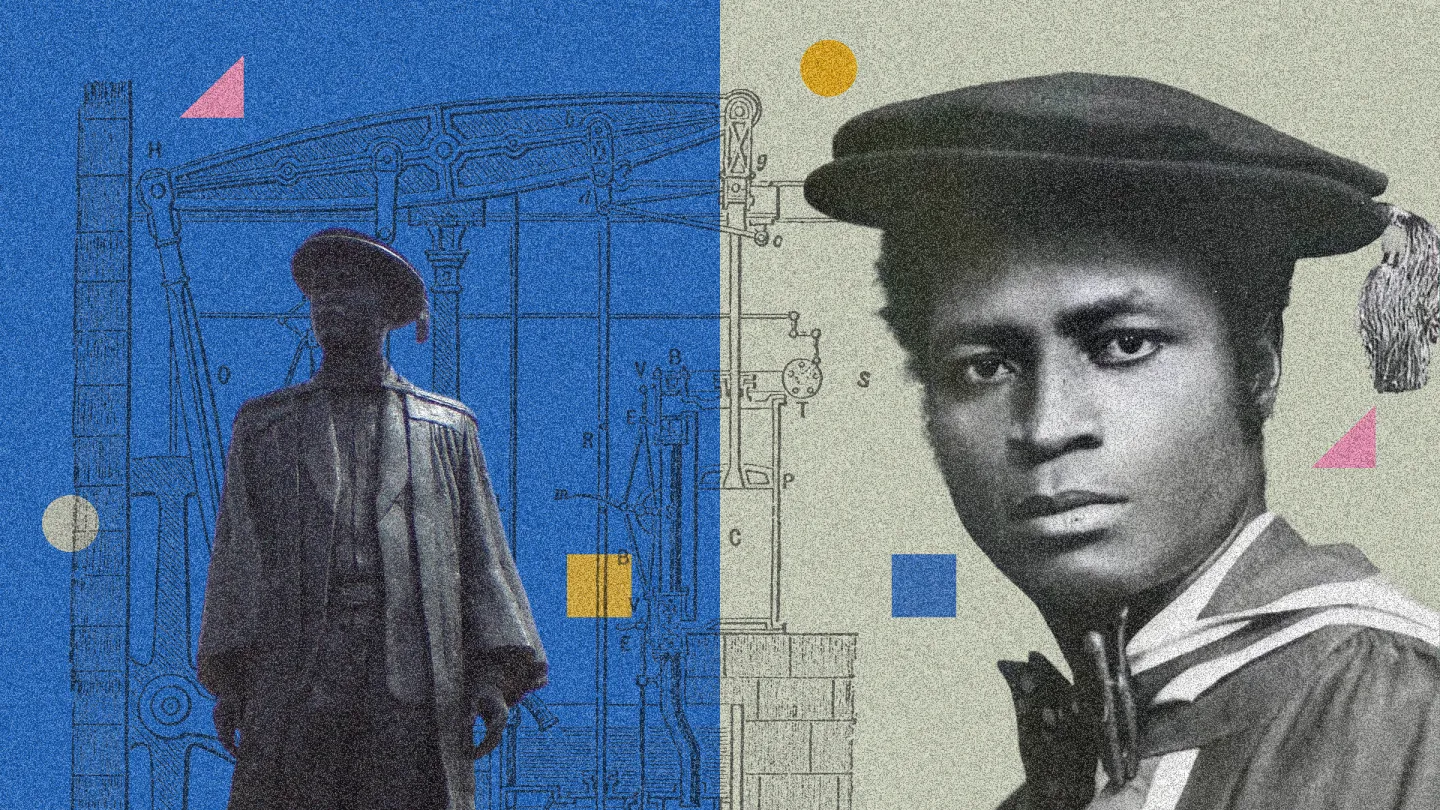
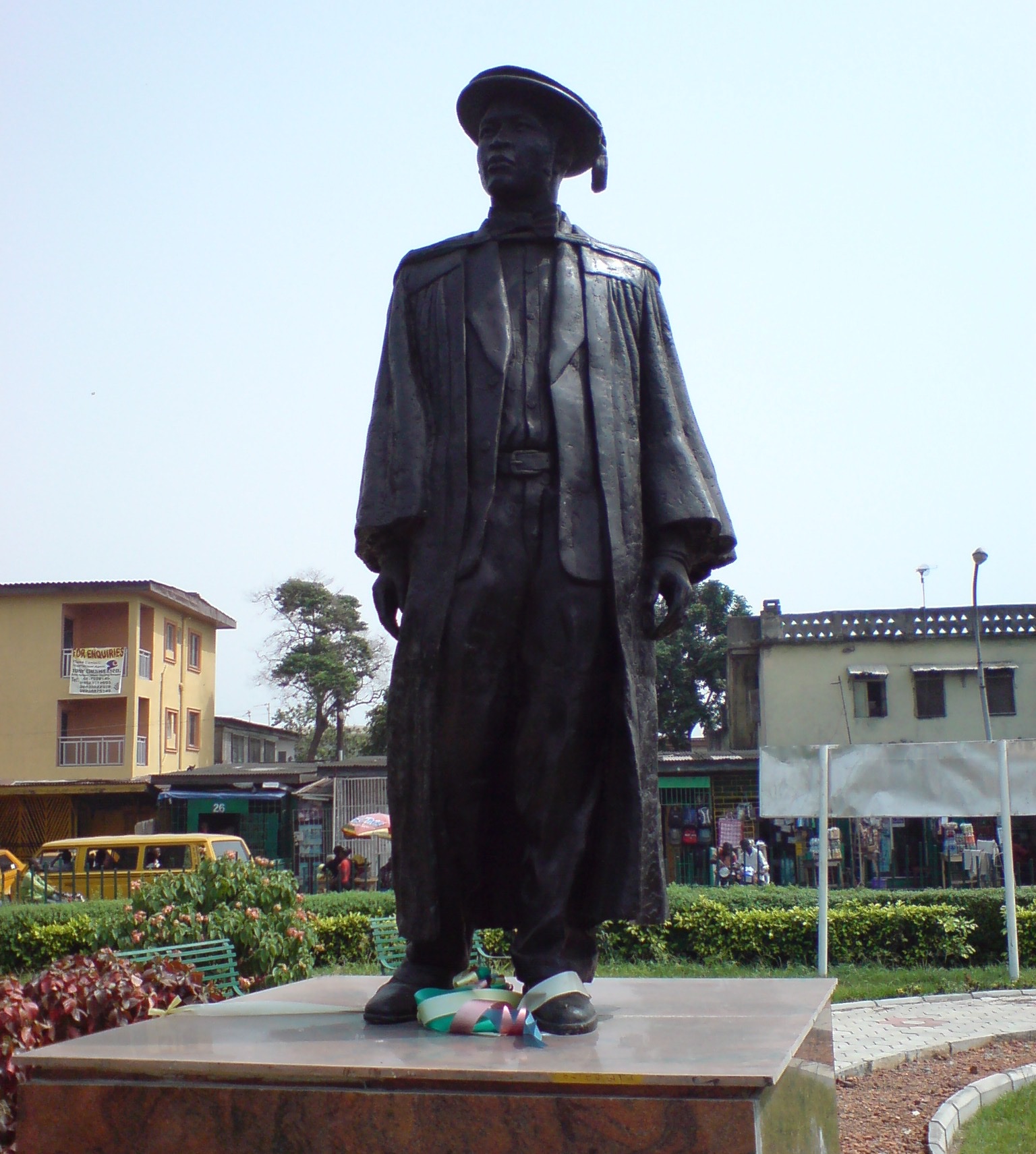
That particular line of questioning is the subject of our discussion today. Ayodele Olutuminu Awojobi’s name may not have been well known in recent decades. But he was an intellectual celebrity during his time. In Nigeria, we remember him for several things. There is his extraordinary academic brilliance, his professorship at the University of Lagos, where he was known as “The Akoka Giant”, his design of the bi-directional armoured vehicle Autonov 1, his teaching, his political activism and his reputation as an unusually gifted intellectual. His life has, as a matter of fact, acquired something of the quality of legend.
But away from the stories and legends, what specifically draws our interest are his research papers and academic programme. In them, we encounter a scientist of enormous analytical ability working on a remarkably coherent set of problems, namely vibration, soil mechanics, seismic phenomena, elasticity, mathematical modelling and even ultrasonic instrumentation.
The possibilities suggested by the research programme in these papers go beyond the particular engineering problems Awojobi was preoccupied with. Through them, one is compelled to imagine a different kind of legacy, that of a founder of a sustained Nigerian research tradition in mechanical waves, sensing and experimental engineering.
Awojobi died in 1984, aged 47. One is moved to ask: what might that specific tradition have become if students, laboratories and institutions had continued his work? What other scientific capabilities might have grown out of it? And does the possibility of that unrealised trajectory tell us anything about the way Nigeria builds, or fails to build, upon its scientific achievements?
Awojobi’s doctoral thesis, completed at Imperial College London in 1965, was titled Vibrations of Rigid Bodies on Elastic Media.[1] It dealt with a problem of rather deceptive difficulty: how does a rigid object behave when it vibrates while resting on an elastic material?
Think of a machine mounted on a foundation. The machine vibrates; the foundation moves; the ground beneath it deforms. One cannot understand the behaviour of the machine without taking into account the material supporting it. The ground is not passive in its involvement. It is part of a coupled mechanical system.
When we treat the ground as an elastic medium rather than a mere immovable surface, the mathematics becomes considerably more complicated. And when the ground or medium is found lacking in uniformity, or the foundation has a different geometry, or it is realised that its properties change with depth, the complexity rises further still.
Awojobi’s early research addressed precisely these difficulties.
In 1965, he and P. Grootenhuis published Vibration of Rigid Bodies on Semi-Infinite Elastic Media in the Proceedings of the Royal Society. The paper treated the vibration of rigid bodies resting on an elastic medium extending indefinitely downwards. It formulated the relevant boundary-value problems and investigated different modes of motion, including vertical vibration and rocking.[2]
In subsequent work, Awojobi extended the analysis to torsional vibration, elastic strata and more complicated material distributions. His 1973 paper, Vibration of Rigid Bodies on Non-Homogeneous Semi-Infinite Elastic Media, addressed a medium whose shear modulus varies with depth. A companion paper considered the torsional vibration of a rigid circular body on a non-homogeneous elastic stratum.[3]
The point of all this was not to make mathematical models more elaborate for the sake of it. The predictions made about the structures resting on the ground are affected by the assumptions made about the ground. A model that treats soil as homogeneous may produce a different estimate of how a foundation will respond from one that accounts for changes in stiffness with depth.
Awojobi was interested in understanding those differences, formulating the mathematics of the more complicated systems and determining which properties of the medium governed their behaviour.
One of his especially revealing contributions concerned the possibility of extracting information about the ground from the vibration of a body resting on it. His 1970 paper, Determination of the Dynamic Shear Modulus and the Depth of the Dominant Layer of a Vibrating Elastic Medium, addressed how the dynamic response of a vibrating system could be used to estimate the properties of the underlying material.
This is a particularly interesting idea. Rather than simply asking how a known material will behave when subjected to vibration, one can reverse the problem. Excite the system, observe its response and use that response to infer properties of the material.
In modern mathematical language, this belongs to the family of inverse problems: recovering information about an unknown system from observable effects.
The same general strategy appears in many areas of science and engineering. Seismologists infer underground structures from the propagation of waves. Materials scientists use acoustic measurements to investigate internal defects. Engineers monitor the vibrations of bridges and machines to detect changes in their structural condition. Medical imaging uses physical signals to reconstruct information about structures that cannot be observed directly.
These do not all belong to the same discipline, of course, and the intention here is not to have Awojobi retrospectively credited with developing them. But the underlying scientific instinct is related: make a physical system respond, measure the response, and use it to learn something about the system that would otherwise remain hidden.
That is a much more expansive way of understanding his work than the usual summary of him as a man who studied vibrations.
Awojobi’s research did not remain confined to idealised circular foundations.
In 1976, he and P. H. Tabiowo published Vertical Vibration of Rigid Bodies with Rectangular Bases on Elastic Media.[4] This particular work brought the analysis closer to the shapes encountered in practical engineering by extending the mathematical treatment to a different foundation geometry.
He also investigated the behaviour of elastic materials that had different patterns of variation in their mechanical properties. In a 1974 paper on Gibson’s law, for example, he examined the vibration of a rigid circular foundation on a non-homogeneous elastic stratum resting on a frictionless base.[5]
There is a pattern to see here. Awojobi repeatedly returned to the same broad class of problems, changing the assumptions and extending the mathematical treatment. Homogeneous media gave way to non-homogeneous ones; idealised geometries gave way to other configurations; infinite media gave way to finite strata.
This is what a developing research programme looks like. It does not necessarily have to be a succession of spectacular discoveries. It is more often the systematic expansion of a problem. It moves from identifying the limitations of an existing model to introducing a more realistic condition, solving the resulting mathematical problem and investigating what the new result means for practical engineering.
His interests also had a direct connection to Nigerian economic activity. In 1974, Awojobi and O. A. Sobayo published research on ground vibrations caused by seismic detonations in oil exploration.[6] Seismic exploration involves generating disturbances in the ground and studying the resulting signals to obtain information about underground geological structures. The energy of an explosion, the depth at which it is detonated and the properties of the ground all affect the vibrations that are produced.
Here Awojobi was applying his interest in mechanical disturbances and the response of physical media to a problem associated with petroleum exploration in Nigeria. Hence, his research was not simply an imported exercise in mathematical sophistication, disconnected from the country in which he worked. It touched a major area of Nigerian industrial activity.
And then, in 1979, came a paper with W. M. R. Smith titled Factors in the Design of Ultrasonic Probes, published in the journal Ultrasonics.[7]
The paper deserves particular attention. Its subject was ultrasonic probe design: the engineering of devices used to generate or receive high-frequency mechanical waves.
That subject opens a door.
Let’s assume that Awojobi’s work had been continued after his death.
Suppose that, in the years following 1984, the University of Lagos had made a deliberate decision to develop his research interests into a sustained interdisciplinary programme. Imagine a Centre for Mechanical Waves and Ultrasonic Engineering, staffed by mechanical engineers, physicists, electrical and electronics engineers, mathematicians, materials scientists and, eventually, medical researchers.
Its initial work might have been modest. It could have continued investigating the vibration of foundations and elastic media, while developing expertise in ultrasonic probes and transducers. Students might have studied how mechanical waves propagate through different materials, how they are reflected or attenuated, and how the resulting signals could be used to infer the properties of the material.
From there, the possibilities begin to multiply.
A laboratory with expertise in vibration and ultrasonic instrumentation could investigate non-destructive testing: examining the internal condition of materials without cutting them open or destroying them. Ultrasonic methods can reveal cracks, voids and other defects in components that must remain intact. Such techniques have applications in manufacturing, construction, petroleum infrastructure, aircraft maintenance and the inspection of pressure vessels and pipelines.
A research group working on vibration could develop methods for monitoring bridges, buildings, industrial machinery and other structures. Changes in a structure’s vibrational behaviour can provide clues about deterioration, damage or altered operating conditions.
Geophysics offers another route. Knowledge of wave propagation and the response of geological materials could support the development of instruments and analytical methods for investigating soils and rocks. Nigeria’s mining and petroleum sectors provide obvious reasons to be interested in such capabilities.
There are also possibilities in medical technology. Ultrasonic instrumentation is central to medical imaging and diagnostics. A laboratory with expertise in transducers, signal generation, wave propagation and measurement could, in principle, develop collaborations with medical physicists, clinicians and biomedical engineers.
None of this means Awojobi was on the verge of establishing a Nigerian medical-ultrasound industry, or that these applications would automatically have emerged from his papers. They would have required additional expertise, equipment, investment, collaborators and decades of further research. The point is that the problems he was investigating sit within a much larger scientific territory, and his original research could have become a starting point.
So what if the work on vibration had not remained a collection of papers associated with one remarkable individual? What if it had become the foundation of a research school, one that trained successive generations of engineers and scientists, developed instruments, established industrial partnerships and gradually moved into new areas of application?
The centre might eventually have become interested in computational mechanics, advanced sensing, acoustic imaging, automated diagnostics and the reconstruction of hidden material properties from measured signals. Its researchers might have found themselves working on problems that Awojobi could not have anticipated.
There is a contemporary comparison that can help show the broader scientific possibilities I’m talking about.
John Oluseun Dabiri, the Nigerian-American engineer and professor at Caltech, works on fluid mechanics, biological locomotion and the physics of energy extraction. He studies the interaction of swimming organisms with the fluid surrounding them and how the flow resulting from that interaction can be measured and understood.
The fact that fluid motion around a freely swimming animal is difficult to observe and quantify is a central challenge in this kind of research. To solve this problem, Dabiri and his collaborators have developed experimental techniques for visualising and reconstructing precisely such flows. Their work with particle-image velocimetry, for example, has been very helpful for researchers investigating the fluid dynamics of swimming jellyfish.
Now, Awojobi’s work and Dabiri’s do not concern the same class of problems. I’m not trying to establish any historical or scientific lineage between their research programmes, nor am I presenting Awojobi’s work on elastic media as an early version of Dabiri’s work on fluid mechanics. However, there is a conceptual resemblance.
Awojobi’s research asks how the response of a vibrating body can reveal the properties of the medium supporting it. Dabiri’s work asks how the motion of a fluid can reveal the forces, mechanisms and energetic relationships involved in biological movement. In both cases, physical dynamics become a source of information.
The scientist does not simply look at a system and describe what is visible. The scientist develops a way of measuring its behaviour, then uses that behaviour to reconstruct something that cannot be observed directly.
The shared experimental instinct here is using the motion of a system to understand the hidden properties and interactions that govern it.
Dabiri’s work also illustrates what can happen when a research programme is supported by a large and continuously developing ecosystem. Fluid mechanics, biology, optics, imaging, computation, instrumentation and mathematical modelling meet in the same laboratory. Students and postdoctoral researchers extend the work; collaborators bring in new methods; instruments are developed to answer questions that existing instruments cannot adequately address.
Awojobi’s research could not simply have become Dabiri’s research. But a continuing Nigerian programme in mechanical waves and instrumentation might have developed its own distinctive trajectory, with its own scientific questions and applications.
Awojobi’s death in 1984 is an obvious dividing line in this story. But it would be too easy to conclude that his research simply disappeared when he did. His papers remain part of the technical literature, and later researchers have continued to cite earlier work on vibration and elastic media.
But while a scientific paper can survive its author, a scientific tradition requires much more than that.
It requires students who understand the work well enough to extend it, institutions that preserve the equipment and expertise needed to investigate its questions, and researchers who can recognise when an old problem has acquired a new application. It requires laboratories that outlive their founders, research groups that reproduce themselves, and universities that treat existing achievements as foundations rather than finished episodes.
This distinction matters because the popular memory of scientific achievement often concentrates on individuals. We celebrate the person who made the invention, published the paper or established the facility. We are less attentive to what happened next.
Did the research group survive? Did its students establish their own groups? Were its instruments improved? Did another institution take up the work? Did an industrial partner find a use for the research? Did the original questions generate new ones?
A scientist can leave behind a remarkable body of work without leaving behind an institution capable of continuing it.
And a country can produce an impressive scientific achievement without developing the capacity to reproduce that achievement at a larger scale.
Nigeria’s experience with its nuclear research reactor offers a useful, though not identical, comparison.
Nigeria’s Nuclear Research Reactor-1, NIRR-1, is a 30-kilowatt miniature neutron source reactor located at the Centre for Energy Research and Training at Ahmadu Bello University, Zaria. It was supplied through a collaboration involving Nigeria, China and the International Atomic Energy Agency. It achieved first criticality on 3 February 2004 and was commissioned and licensed that year.[8]
It is important to understand what this facility is, and what it is not. NIRR-1 is not a nuclear power station. It was designed primarily for research, education and training, neutron activation analysis and the limited production of short-lived radioisotopes.
It has nevertheless supported a range of scientific activities. According to the Nigeria Atomic Energy Commission, these include research in soil fertility mapping, health and nutrition, mining and geosciences, water-resource management, analytical standardisation, and the education and training of nuclear scientists.[9]
Nor is it accurate to describe NIRR-1 as simply abandoned or non-operational. In May 2024, Nigeria marked twenty years of its safe operation. The reactor has also undergone conversion from highly enriched uranium to low-enriched uranium, an important part of international efforts to reduce the civilian use of highly enriched uranium.
There is a genuine achievement here. Nigeria acquired a sophisticated scientific facility, trained personnel and sustained its operation over two decades. But the reactor also illustrates the difference between acquiring a scientific capability and building an expanding scientific ecosystem around it.
NIRR-1 is still Nigeria’s only research reactor. Its relatively modest power and design limit the scale and range of work it can support. The Nigeria Atomic Energy Commission has therefore pursued a proposed Multipurpose Research Reactor, intended to provide greater capacity for research and applications. In February 2026, the Nigerian Nuclear Regulatory Authority reported that Nigeria and the IAEA had begun a Phase II Integrated Nuclear Infrastructure Review mission to assess the country’s readiness for the proposed facility.[10]
My point is not that NIRR-1 has been useless, or that nothing has been built around it. The reactor has supported real research and training. The more consequential question is why the country has not yet developed a broader, more extensive research-reactor infrastructure, and what will be done differently as it pursues the next facility.
A reactor is not a nuclear research ecosystem. It is one component of one.
A mature programme also requires trained reactor operators, nuclear engineers, physicists, chemists, materials scientists, radiation-protection specialists, regulators, maintenance capabilities, reliable funding, research partnerships and a continuing supply of students. It needs institutions capable of developing applications, retaining expertise and generating demand for further scientific work. The reactor is just the beginning of that, not its endpoint.
This is the parallel with Awojobi. In one case, the starting point is a scientist and a body of research. In the other, it is a national scientific facility. The scale and institutional circumstances are different, but the question is related.
Does it generate the next capability? Does the next generation inherit it as a foundation? Does the country build a system that makes further development increasingly possible?
One is often tempted, when discussing Nigerian science, to make everything about funding and more funding. Funding is definitely essential, but it does not exhaust the problem.
A research programme needs money. Sure. But it also needs continuity, technical personnel, institutional memory, equipment maintenance, access to journals and scientific networks, graduate training, opportunities for collaboration and a path from research findings to practical applications.
These elements reinforce one another. A laboratory with capable researchers but unreliable equipment cannot sustain a sophisticated experimental programme. A facility without trained personnel cannot realise its potential. A university that trains excellent students but cannot retain them may find that its research groups repeatedly lose the very people who could have extended their work.
The problem is not always that Nigeria has never possessed the relevant scientific capability. Sometimes it is that the capability has not accumulated.
Awojobi’s research should compel us to imagine what might have grown out of a sustained programme in vibration, elasticity and ultrasonic engineering, just as NIRR-1 should make us wonder what a more extensive national research-reactor system might make possible. Both instances should make us consider the institutions that connect one scientific achievement to the next one.
They bring into focus the matter of scientific memory and what kind of significance it should carry. Remembering Awojobi as a genius is not the same as understanding his scientific contributions. Naming a facility after a scientist is not the same as preserving and extending the research for which the scientist was known. Commemorating an invention is not the same as developing the engineering capacity to improve, manufacture and commercialise it.
The real test of scientific inheritance is not how well the country remembers the person who made the first contribution or initiated an idea, but how useful the contribution becomes to people who never met its author.
Imagine a Nigerian engineer in 2026 developing an ultrasonic instrument for inspecting industrial components. Imagine that engineer working in a laboratory whose methods, training and research questions descend, in part, from a programme established decades earlier. The engineer may never have met Awojobi, and may not even be working on the problems he investigated. But the intellectual and institutional lineage would be there.
We cannot know what would have happened if Awojobi had lived longer, or if his research had become the centre of a major Nigerian engineering programme. The proposed trajectory is a counterfactual, not a lost history waiting to be recovered. Perhaps the laboratory would have struggled. Perhaps its researchers would have moved into different fields. Perhaps some of the applications imagined here would have emerged elsewhere, while others would never have materialised.
But the counterfactual is useful because it makes visible the possibilities contained in a scientific starting point.
Awojobi’s work was not simply about making foundations vibrate. It involved the mechanics of interacting bodies and elastic media, the propagation and response of disturbances, the mathematical description of non-homogeneous materials, and the possibility of inferring material properties from dynamic behaviour. His later work on ultrasonic probes points towards another branch of the same broad territory: the engineering of instruments that use mechanical waves to investigate the physical world.
There was room for that work to grow. There was room for students to take it further, for laboratories to develop new instruments, for industrial partnerships to emerge and for entirely new research questions to be asked. Whether all of this would have happened is unknowable. That it was scientifically plausible is enough to make the question worth asking.
And perhaps this is the more useful way to approach the history of Nigerian science: not as a catalogue of people we should have celebrated more, or inventions we should have commercialised sooner, but as an investigation into the trajectories that began, and the conditions that allowed some to continue while others stalled.
How many laboratories have no clear succession plan? How many instruments cannot be repaired locally? How many promising research groups have produced students who cannot find the institutional support to continue their work? How many scientific facilities are treated as completed projects rather than as the foundations of expanding programmes?
These are questions about the future as much as the past.
A great scientist can produce a remarkable body of work. A great scientific system makes it possible for that work to become the beginning of something its author could never have imagined.
[1] A. O. Awojobi, Vibrations of Rigid Bodies on Elastic Media, PhD thesis, Imperial College London, 1965. https://spiral.imperial.ac.uk/entities/publication/dd5eff55-54c8-460c-946c-7a3bbd4f6078
[2] A. O. Awojobi and P. Grootenhuis, “Vibration of Rigid Bodies on Semi-Infinite Elastic Media,” Proceedings of the Royal Society of London, Series A, vol. 287, 1965, pp. 27–63. https://doi.org/10.1098/rspa.1965.0168
[3] A. O. Awojobi, “Vibration of Rigid Bodies on Non-Homogeneous Semi-Infinite Elastic Media,” The Quarterly Journal of Mechanics and Applied Mathematics, vol. 26, no. 4, 1973, pp. 483–498. https://doi.org/10.1093/qjmam/26.4.483
[4] A. O. Awojobi and P. H. Tabiowo, “Vertical Vibration of Rigid Bodies with Rectangular Bases on Elastic Media,” Earthquake Engineering & Structural Dynamics, vol. 4, 1976, pp. 439–454. https://doi.org/10.1002/eqe.4290040503
[5] A. O. Awojobi, “The Invariance of Gibson’s Law for a Stratum on a Frictionless Base,” Géotechnique, vol. 24, no. 3, 1974, pp. 359–366. https://doi.org/10.1680/geot.1974.24.3.359
[6] A. O. Awojobi and O. A. Sobayo, “Ground Vibrations Due to Seismic Detonation in Oil Exploration,” Earthquake Engineering & Structural Dynamics, vol. 3, no. 2, 1974, pp. 171–181. https://doi.org/10.1002/eqe.4290030206
[7] W. M. R. Smith and A. O. Awojobi, “Factors in the Design of Ultrasonic Probes,” Ultrasonics, vol. 17, 1979, pp. 20–26. https://doi.org/10.1016/0041-624X(79)90007-6
[8] Nigerian Nuclear Regulatory Authority, “Nuclear Facilities: The Nigeria Nuclear Research Reactor (NIRR-1).” https://nnra.gov.ng/nnra/page-nuclear_facilities
[9] Nigeria Atomic Energy Commission, “NIRR-1 Clocks 20 Years of Safe Operation,” May 2024. https://nigatom.gov.ng/nirr-1-clocks-20-yrs-of-safe-operation/
[10] Nigerian Nuclear Regulatory Authority, “NNRA Participates in IAEA Expert Mission on Nigeria’s Nuclear Infrastructure Development,” February 2026. https://nnra.gov.ng/nnra/post-nnra_participates_in_iaea_expert_mission_on_nigeria___s_nuclear_infrastructure_development