For our October edition, we spoke to the Nigerian scientist working on computational fluid mechanics at the Otto Lab, Cornell University.

Iyefu Okwoli
Iyefu Okwoli

Every month, Zeitgeist Shifters puts our questions to a young African breaking new ground, whether in a lab, a classroom, a company or an institution, and lets them answer in their own words. Our October Shifter of the Month is Ameh Emmanuel Sunday.
Ameh grew up between Jos and Abuja. His teenage obsession with chemistry, and with how waste could be turned into something useful, led him and his classmates to design a system that converted animal waste into electricity. The project won them a science competition in secondary school. Today he is a scientist and PhD candidate at Cornell University in New York, working on one of the most stubborn problems in engineering: turbulence. It's the chaotic movement of air and fluid that shakes aeroplanes, drives hurricanes and can take powerful computers days to simulate. His approach, which he calls AI for Science, uses machine learning to build simpler, faster models of these systems. With them, engineers can predict and control the systems in real time, without waiting on expensive simulations.
It has been a big year. His research has taken him across seven U.S. states, to three Ivy League institutions and to Germany. It also took him to Capitol Hill, where he joined an advocacy event with members of the United States Senate on the use of artificial intelligence in mathematics and computational science research. Along the way he earned his master's degree from Cornell, along with a research fellowship and travel funding from organisations including the U.S. National Science Foundation.
He also makes time for the people coming up behind him. He promotes mathematics education among high school students across New York State, volunteers as an organising representative for the National Science Olympiad, and mentors undergraduate and early-stage PhD researchers.
We asked Ameh about growing up in Nigeria, what a day in a Cornell lab actually looks like, how you begin to tame turbulence, and what Africa would need for someone with his training to do this work at home.
My name is Ameh Emmanuel Sunday. I'm originally from Benue State, Nigeria, and I'm a scientist and PhD candidate at Cornell University in New York, USA. I like to broadly describe my research as AI for Science. My work focuses on leveraging artificial intelligence and data-driven methods to develop digital twins and simplified computational models of complex physical systems. These simpler models help us better understand, predict, optimise and control real-world engineering systems faster and more efficiently.
I was born in Jos, Nigeria, and spent most of my teenage years growing up in Abuja, the capital of Nigeria. Growing up, my parents, especially my mum, always emphasised the importance of education. Living in both of these environments also exposed me to people from different backgrounds. I was fortunate to have close friends who were passionate about learning, building science projects and constantly challenging themselves. I also had some really incredible secondary school teachers who encouraged independent thinking and curiosity, some of whom I still keep in touch with today.
I think one common trait I share with many scientists I've come across is an insatiable curiosity to understand how the world works, regardless of our fields. Back in secondary school, I genuinely loved reading the sciences, especially chemistry, which I was particularly obsessed with. I wanted to understand how elements were formed, how they behaved in chemical reactions, and how they could be used in real-world applications.
One of my earliest memories was being fascinated by videos of people in developed countries turning waste materials into valuable products like shoes and clothing through recycling. This particularly caught my attention because I grew up seeing these waste materials everywhere in Nigeria.
That curiosity eventually translated into something practical. Back in secondary school, my classmates and I designed a system that could convert animal waste into electricity, and we went on to win a science competition with the project.
In reality, getting the opportunity to attend Cornell took a lot of due diligence and persistence. But looking back on the journey, I would say that my environment played a huge role in making it possible. I strongly believe that everyone should strive to be in environments where they are not the smartest or most successful person in the room. Surrounding yourself with people who inspire you, are ambitious, and genuinely push you to become better is incredibly important.
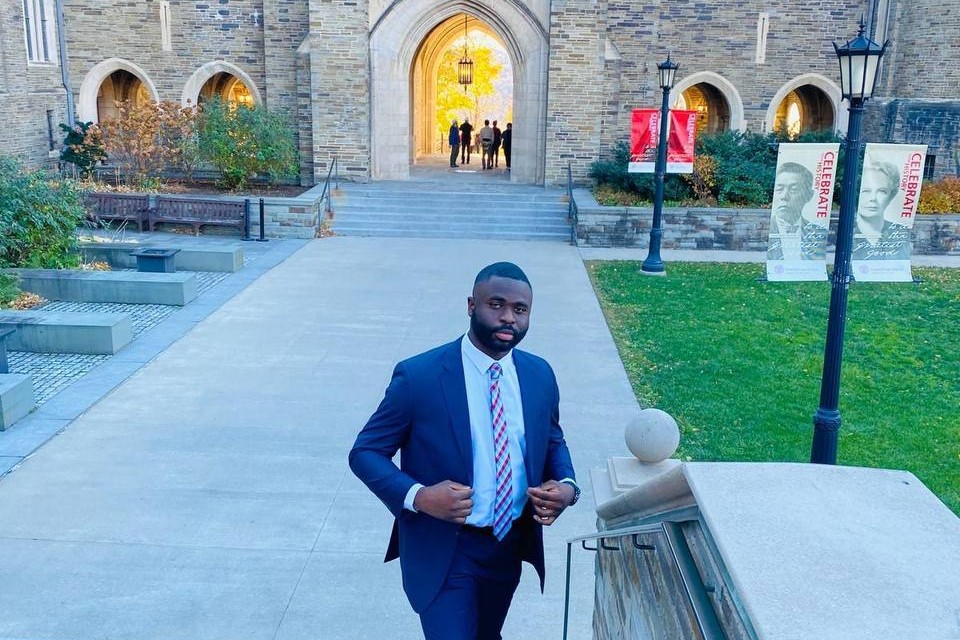
I like to think the answer to this question differs from person to person, depending on the type of research they do. However, I would say that the scientific process, especially in engineering, is pretty standard regardless of your research area. Over a period of time, the goal is usually to answer a specific scientific question. This often starts with a hypothesis, followed by a clearly defined research question and then experiments, whether laboratory-based or computational, to find answers.
My typical day starts with responding to important emails, after which I spend some time reading scientific articles to keep up with recent developments in my research area and brainstorm new ideas. After that, I usually spend a good amount of time writing code, which is something I do a lot of, and then doing some scientific writing. Being able to communicate your science clearly and concisely in writing is a big part of being a scientist, and it's something I consider just as important as the research itself.
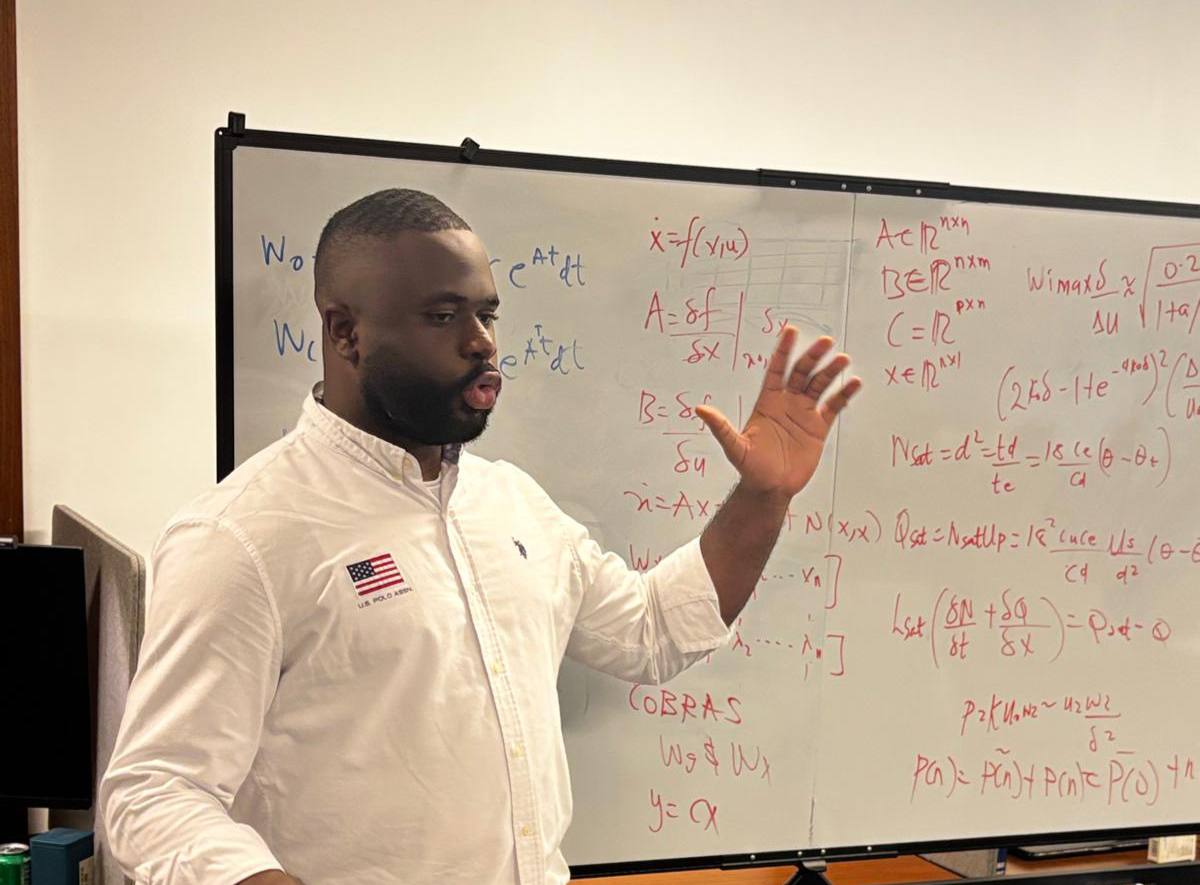
The lab culture is actually very chill and professional. I would say it's also very collaborative, sometimes independent, and always intellectually stimulating. We often help review each other's work, whether it's a paper someone is writing, a new research idea or direction, a proposal, or an upcoming presentation. And I must say, we also have a lot of informal conversations that have absolutely nothing to do with science!
Prof. Samuel Otto also has a very unique mentoring style. He is incredibly supportive and makes sure we have the resources and materials we need for our research. He also has deep and extensive expertise in his field, which allows him to provide clear guidance whenever we get stuck. Most importantly, I would say that while he maintains high standards, he also gives us the freedom to explore new ideas, experiment, fail, and learn from our mistakes. I think this freedom is incredibly valuable and, in some ways, becoming a lost art in scientific research.
Whenever I get stuck on a problem, I can always reach out to my advisor or other labmates who are familiar with what I'm working on. The research we do in our lab is also quite interdisciplinary, and one of the great things about Cornell is how accessible expertise is across different fields. You can often find another professor or scientist, even outside your immediate research area, who is working on a similar problem or has insights that could help. And sometimes, that person is just one email away.
Cornell is actually located in a quiet part of New York State, which I think is a really great environment for the kind of work we do. It's also surrounded by lots of waterfalls, forests and lakes. So, if you're someone who is very outdoorsy and loves being surrounded by nature, you would absolutely love this place. It's also relatively close to New York City, which is where I often spend my time whenever I'm on a break or vacation.
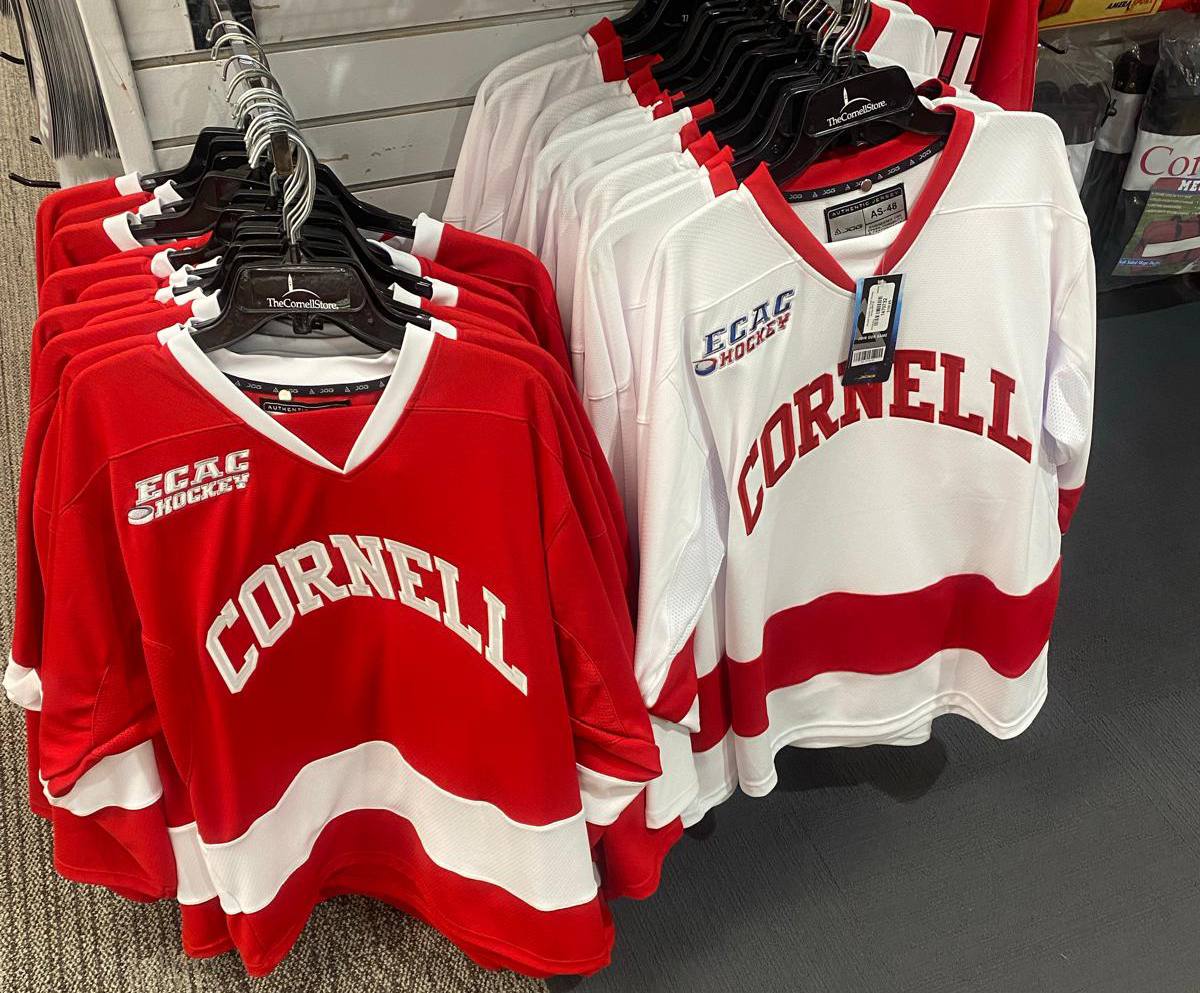
One thing that low-key surprised me, though, is how much American universities take pride in producing merchandise for almost everything! I'm talking about sweatshirts, mugs, umbrellas, pencils, dog collars, and the list goes on. Funny enough, these items aren't just found on university campuses; they're scattered all over the world, which is something that still baffles me. For example, it's not uncommon to see a kid walking down the street in Nigeria wearing a Harvard or Yale sweatshirt. I think university merchandise has become more than just clothing or everyday items. It's a major cultural symbol of identity, belonging and even status, which I find quite fascinating.
I always wanted to do some work in AI, and as someone who loves science, I think combining both fields and pursuing AI for Science research was the right step for me.
Firstly, my work largely revolves around breaking down the complexity of turbulence into simpler parts. For most people, turbulence is something they associate with bumpy aeroplane rides, where irregular air movements cause sudden jolts and shaking.
When you watch smoke rising from a fire or the swirling winds of a hurricane, you're witnessing turbulence. Turbulence can also occur in blood flowing through certain parts of the body. In reality, turbulence is one of the most common yet complex phenomena observed in nature.
Turbulence remains incredibly difficult to understand and predict because accurately simulating it can require tracking an enormous number of interacting motions within a fluid. My research uses machine learning and AI tools to simplify this complexity while preserving the most important physical behaviours.
But understanding turbulence is only part of the challenge. We also want to simulate these complex systems much faster and, more importantly, control their behaviour. This is where a major part of my research comes in: developing what we call reduced-order models, or simply simplified models of complex physical systems.
Numerical simulations are essentially computer-based experiments that help engineers predict how physical systems behave. For example, CFD simulations can show how air flows around an aeroplane wing or an F1 car. However, these simulations can take hours or even days to complete. Imagine optimising the shape of an aeroplane wing, where hundreds of simulations might be needed to find the most efficient design. This quickly becomes computationally expensive.
In some situations, we don't even have the luxury of waiting hours. Imagine a fighter jet approaching an aerodynamic stall. Its control system must respond almost immediately to maintain stability. Rather than relying on expensive simulations during flight, simplified models developed beforehand can help predict the aircraft's behaviour and support rapid control decisions. Reduced-order models make this possible by capturing the essential dynamics using far fewer variables.
Ultimately, my research focuses on developing data-driven reduced-order models using machine learning and AI tools. The goal is to make complex engineering systems easier to understand, faster to simulate, and more efficient to predict and control in real time.
My approach generally follows the standard scientific process. We start with a research question and develop a hypothesis that serves as a guide towards answering that question. In my case, these questions usually revolve around developing better reduced-order models or digital twins, to better understand and simulate complex physical systems faster.
Once we have a clearly defined research question, we leverage machine learning techniques to identify the most important features of the complex system, which make up the building blocks of the reduced model.
Of course, we don't immediately jump into building simpler models for the most complicated engineering systems. We usually start with smaller, representative models where we can understand the problem more clearly, test different ideas, and determine whether our proposed approach actually works. We compare the results from our simplified models against those from the original, more complex systems to see how accurately they reproduce the behaviour we are interested in.
Once we have developed a method that works well on these medium-sized problems, we gradually scale it up to more challenging applications, such as building reduced-order models that enable fast simulation and real-time control of airflow in a wind tunnel. At that scale, we might be interested in predicting how air moves around an aircraft or determining how to manipulate the airflow to reduce drag or improve aerodynamic performance. These are much more demanding problems, and the real challenge is ensuring that our methods remain accurate and computationally efficient as the complexity increases.
I think the measure of scientific research success differs across fields. For those of us in engineering, having the opportunity to share work we've spent months, or even years, developing is a big achievement in itself.
This year alone, I've been privileged to travel across seven U.S. states to present and discuss my research, including a visit to the nation's capital and three Ivy League institutions. My work was also presented in Germany. Along the way, I earned a master's degree, received a fellowship, and was awarded several travel grants to support my research activities, all of which I am proud of.

Looking back, I'm grateful for these opportunities, especially the chance to meet other researchers, exchange ideas, and see how far the work I've put in has taken me.
One of the problems I'm currently working on involves something called data assimilation, an idea widely used in weather forecasting and robotics. Essentially, it leverages real-world sensor measurements to estimate what is happening in these engineering systems.
It turns out that the reduced-order models I build can make this process much faster. For example, instead of tracking millions of variables describing airflow in a wind tunnel, we can use a much smaller model to predict its behaviour and update those predictions as new sensor measurements arrive. This allows us to estimate and potentially control complex physical systems faster, without the computational expense of running full simulations.
I think being able to communicate your science effectively to a wide range of audiences is just as important as doing the science itself. This is a skill I've had to develop over the past two years of my research career.
Another thing I've learned is how to put myself out there. There are so many opportunities to grow as a scientist in the United States, but they aren't simply handed to you. You have to actively seek them out, learn how to present yourself, and communicate the value of your work.
I think my research has enormous potential in Africa, particularly in energy, manufacturing and infrastructure. For example, imagine being able to build a digital twin of a power plant or an industrial facility, allowing engineers to simulate its behaviour, predict potential problems, and optimise its operations without experimenting directly on the physical system.
This is already the direction companies like NVIDIA and Siemens are moving towards with technologies such as Omniverse, which supports the development of digital twins for industrial applications. My research focuses on the computational side of this idea, particularly how we can develop smaller, faster models that make simulation, prediction and control more practical.
Another interesting example comes from NASA, where researchers used powerful supercomputers to study how small jets of air could manipulate airflow around aeroplane wings to improve aerodynamic performance. These simulations required millions of processor-core hours. My research aims to develop simplified models that could make similar simulations and control problems much faster and less computationally expensive. I think this could eventually be valuable for aerospace research and engineering applications in Africa as well.
For someone with my training to conduct this kind of research in Africa, I think the most important requirements would be access to computing infrastructure, research funding, and stronger partnerships between universities and industry. Africa already has some of this infrastructure. For example, South Africa's Centre for High Performance Computing provides advanced computing resources that support scientific research. Expanding access to facilities like this, alongside sustained government funding and partnerships with technology companies such as NVIDIA, could provide an environment for developing and testing these methods.
We would also need partnerships with African energy companies, manufacturing firms and engineering organisations willing to provide real-world data and opportunities to test these technologies. I don't think the challenge is necessarily a lack of talented researchers in Africa, but rather creating an environment where they have the resources and opportunities to turn their ideas into practical solutions.
Whatever problem you find that is worth solving, go for it. Don't wait for permission to get started. Just begin. From my experience, people are often more than willing to offer guidance and support when they see that you're already taking meaningful steps towards solving a problem, whatever that might look like.
Most importantly, be consistent in your efforts and surround yourself with people who constantly challenge you to do better. And this might sound cliché, but I believe failure is the default state of trying to achieve anything extraordinary. It's something one gets to understand better through experience than through words. You will make mistakes, things won't always work out, and that's part of the journey. What matters is that you keep learning and keep improving.
You can find more of Ameh's research, publications and talks on his website.